
Spring Pollen Damage: How to Reset Your Miami Car's Paint
Spring pollen etches Miami car paint when heat and rain bake it in. Here is how to spot the damage, reset the clear coat, and protect the finish through next season.
Quick Navigation
Why Spring Pollen Damages Miami Paint
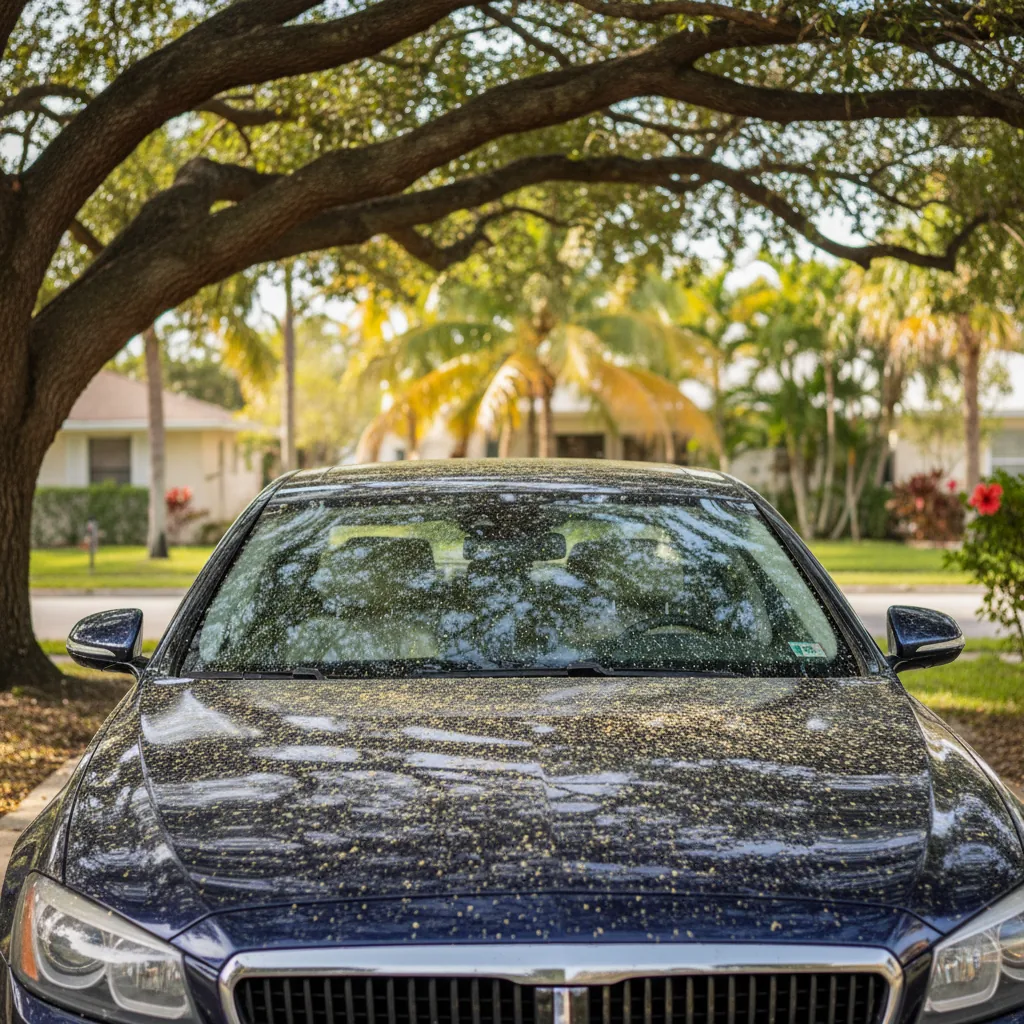
Spring pollen looks harmless. Yellow dust on the hood, easy to wipe off, no big deal. That is exactly the problem. Pollen is acidic and biologically reactive, and in Miami it lands on paint surfaces that are already hot from sun and wet from afternoon thunderstorms. The combination etches into the clear coat fast, and once it is in the surface, a regular wash will not lift it.
Miami pollen season runs heaviest from February through May. Live oaks, slash pines, and palm trees produce a thick yellow coating that settles on every car parked outside. Owners in tree-heavy neighborhoods like Coral Gables, Coconut Grove, and Pinecrest see the worst buildup because mature canopy means more pollen falling directly onto vehicles every day for weeks.
What Makes Miami Pollen Worse Than Most Cities:
- • Thick canopy means heavy daily deposits on parked cars
- • High humidity turns dry pollen into a sticky paste within hours
- • Afternoon thunderstorms drive pollen into clear coat pores
- • Intense UV bakes the residue onto paint between rinses
- • Long season stacks 12+ weeks of continuous exposure
A Regular Wash Will Not Fix It
By the time pollen looks bad enough to bother you, the damage is already in the clear coat. A standard exterior wash removes the loose surface dust but does nothing for the etched particles bonded below the top layer. That is why your car looks dingy a day after a normal wash during pollen season. The visible yellow is gone but the embedded contamination is still there, dulling the finish from underneath.
Why Late May Is the Right Time
Pollen production drops sharply once summer humidity locks in. May into early June is the window where the season is winding down but the damage is still fresh enough to reverse easily. Wait until July and the etching has hardened into a permanent dulling of the finish that takes paint correction instead of a simple reset. The earlier you handle it, the cheaper and faster the fix.
How the Damage Actually Happens
Pollen grains have spiky outer shells. Under a microscope they look like tiny medieval weapons. When wind drops them on warm paint, the spikes catch on micro-rough texture in the clear coat. So far so good. Brush them off and they leave. The problem starts when moisture hits.
Rain, dew, or even humid air softens the pollen grains and breaks them open. Inside is a mix of proteins and oils that are mildly acidic. Acid plus heat plus a porous clear coat surface equals a chemical reaction at the molecular level. The acid eats microscopic divots into the clear coat that fill with pollen residue. When the surface dries, the residue is sealed in place. Wipe the hood now and you might not even see anything wrong, but the paint will catch light at the wrong angles and look hazy in sunlight.
Common Mistake to Avoid:
Wiping pollen off dry paint with a towel or dry rag. The pollen grains are abrasive, and dragging them across dry clear coat puts micro-scratches all over the panel. Always rinse first to lift loose pollen, then wash with a lubricated soap and a clean mitt. Dry wiping during pollen season is one of the fastest ways to damage paint without knowing it.
The Compounding Effect of Daily Exposure
One pollen day is not a crisis. Twelve weeks of daily pollen on the same panels is what creates real damage. Each rinse and dry cycle in Miami spring weather drives more contamination deeper into the clear coat. By April most outdoor-parked cars in Palmetto Bay and other suburban neighborhoods have measurable haze on horizontal surfaces. By May, the hood and roof are visibly duller than the vertical doors that received less direct exposure.
Dark Paint Shows It First
Black, navy, dark gray, and red paint reveal pollen damage faster than white or silver. The reason is contrast. Embedded yellow residue against a dark finish creates visible haze even at low concentrations. Light-colored cars hide the damage longer, which is worse in the long run because the contamination keeps building without obvious warning signs.
Signs Your Paint Has Pollen Damage
Most owners do not realize pollen has done damage until they see the contrast after a proper reset. Here are the warning signs that show up before that point. If any of these match what your car looks like right now, the clear coat is contaminated.
Visual Signs
- • Hazy or cloudy hood after washing
- • Paint looks dull in direct sun
- • Yellow tinge on white cars
- • Water beads roll off unevenly
Touch Signs
- • Rough or gritty feel on horizontal panels
- • Plastic bag test catches and snags
- • Surface feels textured, not glassy
- • Hood feels coarser than doors
Water Signs
- • Water sheets instead of beading
- • Spots dry quickly into hard rings
- • Soap rinses off too fast
- • Drying towel drags on paint
The Plastic Bag Test
Put your hand inside a plastic sandwich bag and slowly drag it across a clean panel. If the bag glides smoothly, the clear coat is healthy. If it catches, drags, or feels gritty, you have bonded contamination sitting on the surface. This test takes ten seconds and tells you exactly which panels need a reset versus a normal wash. Owners in Kendall who garage their cars often pass the test on the doors but fail on the hood, which confirms that exposure is the driver.
Pro Tip: Run the plastic bag test in the morning when paint is cool and dry. Heat softens the contamination and can fool you into thinking the surface is smoother than it really is. Cold paint shows the true texture and is the honest measurement of how much clear coat decontamination work you need.
When Damage Crosses Into Permanent
Surface contamination lifts with clay bar work. Deeper etching shows up as permanent water spots, ring marks, or uneven gloss that does not improve after extraction. At that point, the clear coat itself is damaged and only paint correction or compound polishing can restore it. The difference between contamination and etching is the difference between a 90-minute service and a half-day paint correction job. Catching it early matters.
The Reset Process: Clay Bar to Sealant
A proper post-pollen reset is a three-step sequence. Each step does something the previous one cannot, and skipping any of them leaves contamination on the paint. The whole process runs about 90 minutes to two hours for a sedan depending on damage level.
Step 1: Decontamination Wash and Iron Removal
Start with a thorough hand wash using a foam pre-soak that softens bonded contamination before any contact. After rinsing, apply an iron-removing chemical that turns purple as it dissolves brake dust and metal particles trapped in the clear coat. This step alone lifts a lot of the embedded residue that survived months of regular washes.
Step 2: Clay Bar Treatment
Clay bar work is the centerpiece. The clay grabs anything still bonded to the clear coat after washing and pulls it free. Pollen residue, tree sap, road tar, industrial fallout. The clay glides smoothly once a panel is clean, which is also how you know when the work is done. Our clay bar service is built for exactly this kind of seasonal contamination buildup, and it is the difference between a paint surface that looks clean and one that actually is clean down to the clear coat.
Step 3: Protection Layer
Bare decontaminated paint is unprotected and absorbs new contamination faster than treated paint. Always seal after a clay bar treatment. A paint sealant or carnauba wax adds 8 to 12 weeks of hydrophobic protection that makes the next round of pollen rinse off instead of bond. For deeper protection, paint correction followed by a coating treatment gives you 6 months to 2 years of protection in one appointment.
Full Reset Sequence:
- • Foam pre-soak to soften bonded contamination
- • Two-bucket hand wash with grit-guard rinse bucket
- • Iron remover for metallic particles in clear coat
- • Clay bar treatment on all painted surfaces
- • Spot-free water rinse to drop mineral deposits
- • Hand dry with clean microfiber towels
- • Sealant or wax applied to all decontaminated panels
Service Tier Recommendations by Damage Level
The right service depends on how bad the contamination is and how much protection you want going forward. Most Miami cars after a full pollen season fall into one of three groups.
Mild: Hazy But Smooth
If your paint looks dingy but the plastic bag test still glides cleanly, you have surface dulling without bonded contamination. A premium wash with an iron remover and a fresh sealant adds protection and restores the shine without needing the full clay-bar reset. Owners in Doral who garage at night and only get morning pollen exposure usually land here.
Moderate: Bonded Contamination
If the plastic bag test catches and drags on horizontal panels, you need clay bar work plus a sealant. This is the most common post-pollen scenario for outdoor-parked cars and is what the full reset process described above is built for. Budget about half a day for a thorough job. See our current pricing for the clay bar plus sealant combination, which most owners book as a package rather than separate services.
Severe: Etching and Water Spots
If you can see permanent rings, uneven gloss between panels, or visible scratches under bright light, the damage is deeper than clay bar work can reach. A full detail with machine polishing or a separate paint correction service is the right move. This restores the clear coat surface itself rather than just removing what is sitting on top. For luxury vehicles or cars you plan to keep long-term, pair the correction with a ceramic coating to lock in the result.
Choosing the Right Tier
Owners trying to decide between tiers should think about how often the car gets washed and how often it sees outdoor parking. Daily outdoor parking with monthly washes means heavy contamination that needs the deeper reset. Garage parking with weekly washes usually needs only the lighter intervention. The right choice depends on damage plus how long you want the result to last.
Protecting Paint Through Future Pollen Seasons
A reset fixes this year. Protection prevents next year. Once the paint is clean, the easiest way to skip the damage cycle entirely is to add a long-lasting protective layer before pollen season starts.
Sealant or Wax Every Quarter
A sealant or wax application adds 8 to 12 weeks of hydrophobic protection. Apply one in February before pollen season ramps up, refresh in May at the tail end, and the paint stays smooth and sealed through the heaviest contamination months. This is the cheapest and easiest preventive option. Most owners can stay on this schedule for years without ever needing the full reset.
Ceramic Coating for Long-Term Protection
A ceramic coating bonds to the clear coat at the molecular level and lasts 6 months to 2 years depending on the formula and prep work. Pollen, bird droppings, and tree sap simply do not stick to a properly coated surface, and a quick rinse removes anything that lands. The investment is higher upfront, but for owners who keep luxury cars or who park outdoors year-round, the multi-year math works out cheaper than repeated reset jobs. For a deeper comparison of these two options, see our breakdown on ceramic coating versus wax in Miami's climate.
Pro Tip: The single best timing for ceramic coating in Miami is January or early February, after the heavy winter rains and before pollen season starts. The paint can be properly decontaminated with the coating applied to clean clear coat, and the coating is fully cured before pollen exposure ramps up. Booking the coating mid-pollen season works, but the prep takes longer and the timing is harder.
Routine Habits That Help
Beyond coatings, two daily habits make a real difference. Rinse the car once a week with plain water from a garden hose during peak pollen weeks, even if you are not doing a full wash. This lifts loose pollen before it gets wet and bonds. Second, park under cover when you can. Garages, carports, and even tree-free driveway spots reduce daily exposure significantly. Owners who combine quarterly sealant with weekly rinses rarely see meaningful pollen damage anymore.
Book the Reset and Protection Together
If your paint needs a reset right now, pair it with the next protection tier in the same appointment. Doing both at once is more efficient than booking separately, and the protection layer goes onto perfectly prepped paint for maximum bond strength. Reach out through our scheduling page with a quick note about your current paint condition and we will recommend the right tier before the appointment.
Reset Your Pollen-Damaged Paint Before Summer
May is the window. Pollen season is winding down but the damage on your paint is still fresh enough to reverse with a proper clay bar treatment and sealant. Our mobile team brings everything to your driveway and handles the full decontamination plus protection cycle in a single appointment anywhere across Miami-Dade or Broward. Most cars finish in under three hours.
Related Articles
Top 5 Car Cleaning Tips for Miami's Humid Weather
How humidity affects every part of your car and the simple habits that keep mildew, mold, and trapped moisture under control year round.
Mobile Car Wash for Pet Owners: Hair, Smells, and Stains in Miami
Pet hair removal, ozone treatment, carpet extraction, and leather care for owners hauling dogs around Miami every week.